
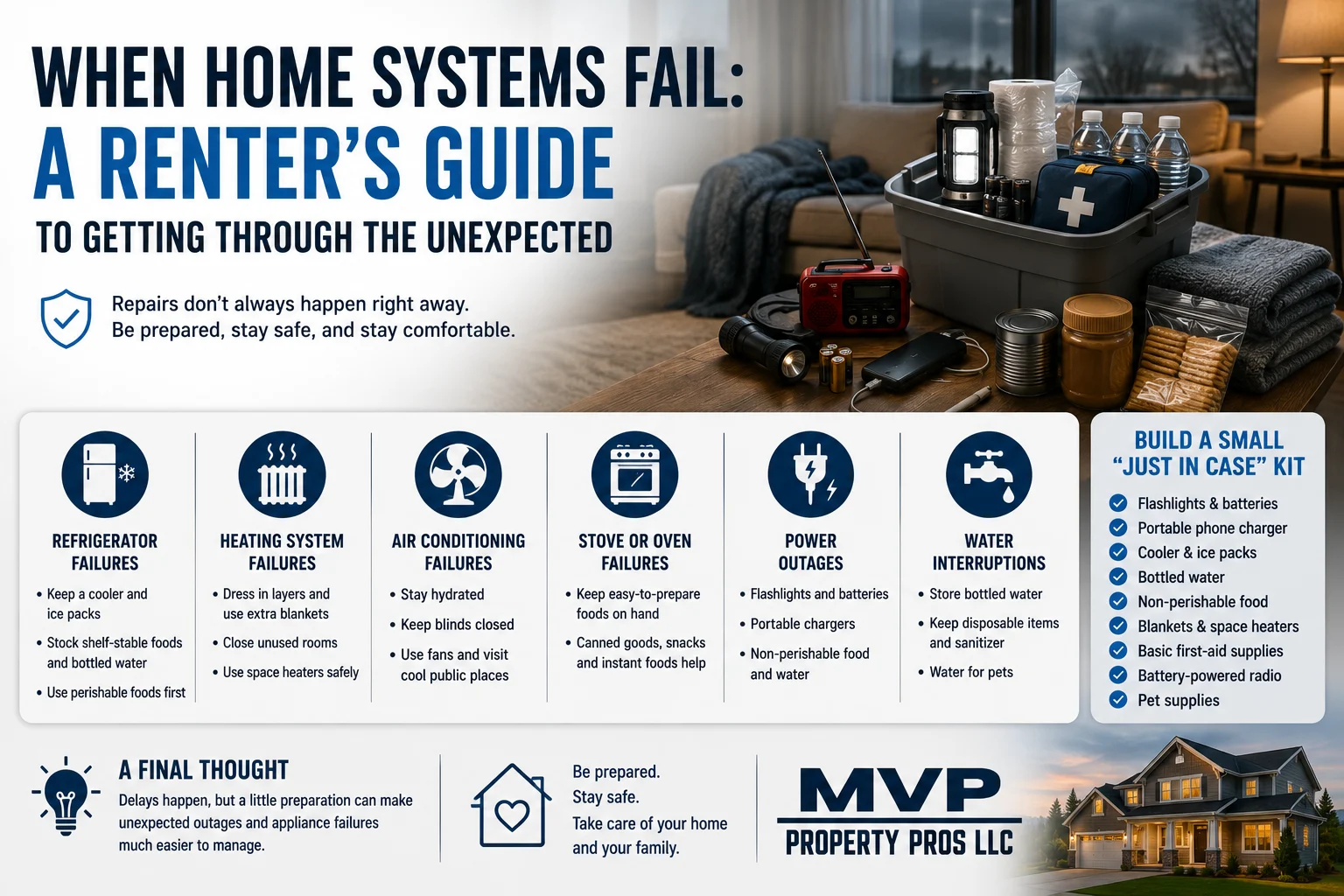
No one expects the refrigerator to quit, the furnace to stop working, or the power to go out. While landlords and property managers work to arrange repairs, those repairs don’t always happen immediately, especially on evenings, weekends, holidays, or during periods of high demand.
The best approach is to be prepared for short-term inconveniences so you can remain safe and comfortable while waiting for service.
Refrigerator and Freezer Failures
A refrigerator or freezer breakdown can result in food loss and unexpected expense. Having a plan can help minimize the impact.
Consider keeping:
- A cooler for temporary food storage
- Reusable ice packs
- Shelf-stable foods that do not require refrigeration
- Bottled water and beverages
If your refrigerator stops working, prioritize using foods that are most likely to spoil first. Having a few ready-to-eat meals, canned goods, soups, crackers, peanut butter, or protein bars can help bridge the gap until repairs are completed.
Heating System Failures
A furnace outage can be particularly challenging during cold weather.
To stay comfortable while waiting for repairs:
- Dress in layers, warm socks, hats, and sweatshirts.
- Use extra blankets and sleeping bags
- Close doors to unused rooms
- Gather family members in one area of the home to conserve heat
- Have a couple space heaters on-hand (making sure to keep them in a safe place away from flamables).
Keep a small supply of cold-weather essentials on hand year-round, even if you rarely need them. A few extra blankets can make a significant difference during an overnight heating outage.
Air Conditioning Failures
During hot weather, an air conditioning breakdown can make a home uncomfortable quickly.
While waiting for repairs:
- Drink plenty of water
- Keep blinds and curtains closed during the day
- Use fans if available
- Spend time in cooler public spaces such as libraries, community centers, shopping centers, or coffee shops
- Reduce activities that generate excess heat indoors
Consider keeping a portable fans available for emergencies, especially during summer months.
Stove or Oven Failures
Cooking appliances occasionally fail, and parts may not always be available immediately.
A small emergency food supply can help you avoid unnecessary stress.
Items to keep on hand include:
- Canned soups
- Tuna and canned meats
- Peanut butter
- Crackers
- Granola bars
- Instant foods that only require hot water
- Shelf-stable milk and beverages
Even a modest pantry can provide several days of meal options without relying on a stove or oven.
Complete Power Outages
Power outages affect many aspects of daily life at once, including lighting, communication, refrigeration, and heating or cooling equipment.
A basic outage kit should include:
- Flashlights
- Extra batteries
- Portable phone chargers
- Bottled water
- Non-perishable food
- Battery-powered lanterns
- Blankets
Many outages are resolved relatively quickly, but it is wise to prepare for longer interruptions. Keeping mobile devices charged whenever severe weather is forecast can help ensure access to emergency information and communication.
Water Interruptions
Although less common, water service interruptions can occur because of utility issues, pipe failures, or emergency repairs.
It is helpful to keep:
- Bottled drinking water
- Water for pets
- Disposable plates and utensils
- Hand sanitizer and wet wipes
Even a small reserve of water can provide peace of mind during an unexpected disruption.
Build a Small “Just In Case” Kit
You do not need an extensive emergency stockpile. Most renters can be well prepared with a modest collection of supplies that fits in a closet or storage bin:
- Flashlights
- Batteries
- Portable phone charger
- Cooler and ice packs
- Bottled water
- Non-perishable food
- Blankets
- Space heaters
- Basic first-aid supplies
- Battery-powered radio
- Pet supplies, if applicable
These items can make a temporary repair delay far easier to manage.
A Final Thought
Most appliance and system failures are temporary, but they rarely happen at a convenient time. Repairs may be delayed by weekends, holidays, severe weather, supply shortages, or contractor availability. Having a small emergency preparedness plan allows you to remain comfortable, reduce stress, and care for yourself and your family while waiting for repairs to be completed.
Being prepared doesn’t mean expecting the worst, it simply means being ready for life’s occasional inconveniences. A little planning today can make an unexpected outage or appliance failure much easier to handle tomorrow.