
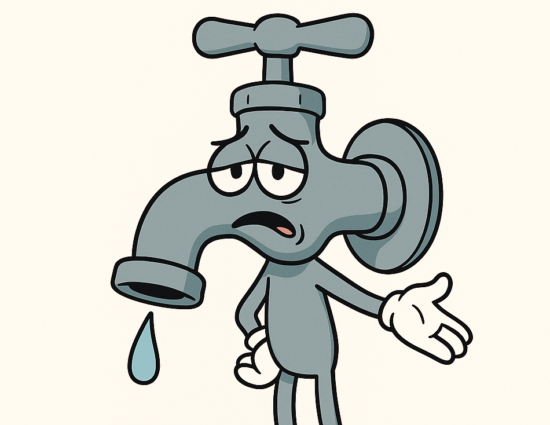
Turning an outdoor spigot on and off doesn’t take a genius. You turn the handle, water comes out. Simple, right?
And yet… Every year we receive multiple maintenance calls for outdoor faucets that are broken, leaking, or mysteriously spinning in circles like they’ve given up on life. While outdoor spigots are designed to be sturdy, they are not indestructible. A little care goes a long way—especially when it comes to something attached directly to the plumbing inside your home.
Why Being Gentle Matters
Outdoor spigots are connected to pipes inside the wall. When they’re forced, cranked too hard, or yanked while a hose is still attached, it can damage not just the handle, but the pipe behind it. That kind of damage isn’t just inconvenient, it can lead to leaks inside the walls, water damage, and repairs that are far bigger than anyone wants to deal with.
In short: what feels like “just the faucet outside” can become a serious (and expensive) problem.
Common Spigot Mistakes We See
- Turning the handle as hard as possible when it’s already fully open or closed
- Leaving hoses attached during freezing weather
- Trying to “fix” a stiff handle by forcing it
How to Be a Spigot Pro
Here’s all it takes:
- Turn the handle slowly and gently
- Stop when it’s fully open or closed—no extra torque needed
- Remove hoses when not in use, especially before cold weather
- If it’s hard to turn, don’t force it—let us know
When to Call Maintenance
If you notice leaking, continual dripping after gentle shut‑off, wobbling, or a handle that won’t turn easily, please submit a maintenance request to prevent a minor issue from becoming a major repair.
We promise—we’d much rather help before the spigot gives up completely.
Thanks for helping us keep everything working smoothly. Your outdoor faucet (and our maintenance team) truly appreciate it.