
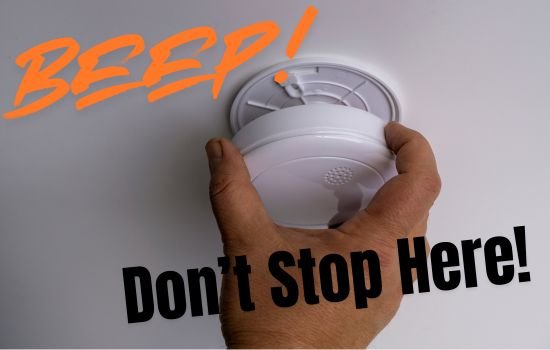
We’ve all done it. The smoke alarm starts beeping and you don’t have a new battery. Or, you replace the battery but it doesn’t stop that incessant beeping! So, you rip it off the ceiling and say, “I’ll deal with it later.”
Months later, your old detector is still sitting on the shelf in the linen closet and an empty space where it used to be remains on the ceiling. Interesting fact, an overwhelming 100% of smoke goes undetected by a smoke alarm that has been removed and not replaced!
Worse yet, your alarm might be trying to alert you to carbon monoxide in your air. No, not CO2. Those are the fun bubbles in your soda.
CO, or carbon monoxide, is a colorless, odorless, tasteless gas that will slowly kill you. It’s commonly caused by carbon-based fuels such as natural gas or wood being burned in your home when the appliance is defective and not burning or venting cleanly. This is NOT one to ignore. Get out of the house and call the gas company or, if you feel your life is in danger, call 911.
You should test each of your alarms every month by holding the test button down until it beeps. If the batteries are replaceable, do so every year. We recommend choosing a memorable day like the switch to or from Daylight Saving Time or New Years.
Some alarms tout a 10-year permanent battery. However, we have seen them fail much sooner. You should replace your alarms–even those with replaceable batteries–every 10 years or sooner if they fail to test properly or start beeping uncontrollably and without reason. You can often find the manufactured date on the back.
Pro tip: When you replace your alarms, write the current date on the back or side of the alarm for your future reference.
This is serious stuff. Don’t neglect those little gadgets that could save your life. If you have questions about where smoke and carbon monoxide detectors should be placed in your home or need help installing them, please don’t hesitate to contact us. We would be more than happy to help protect you and your family.